


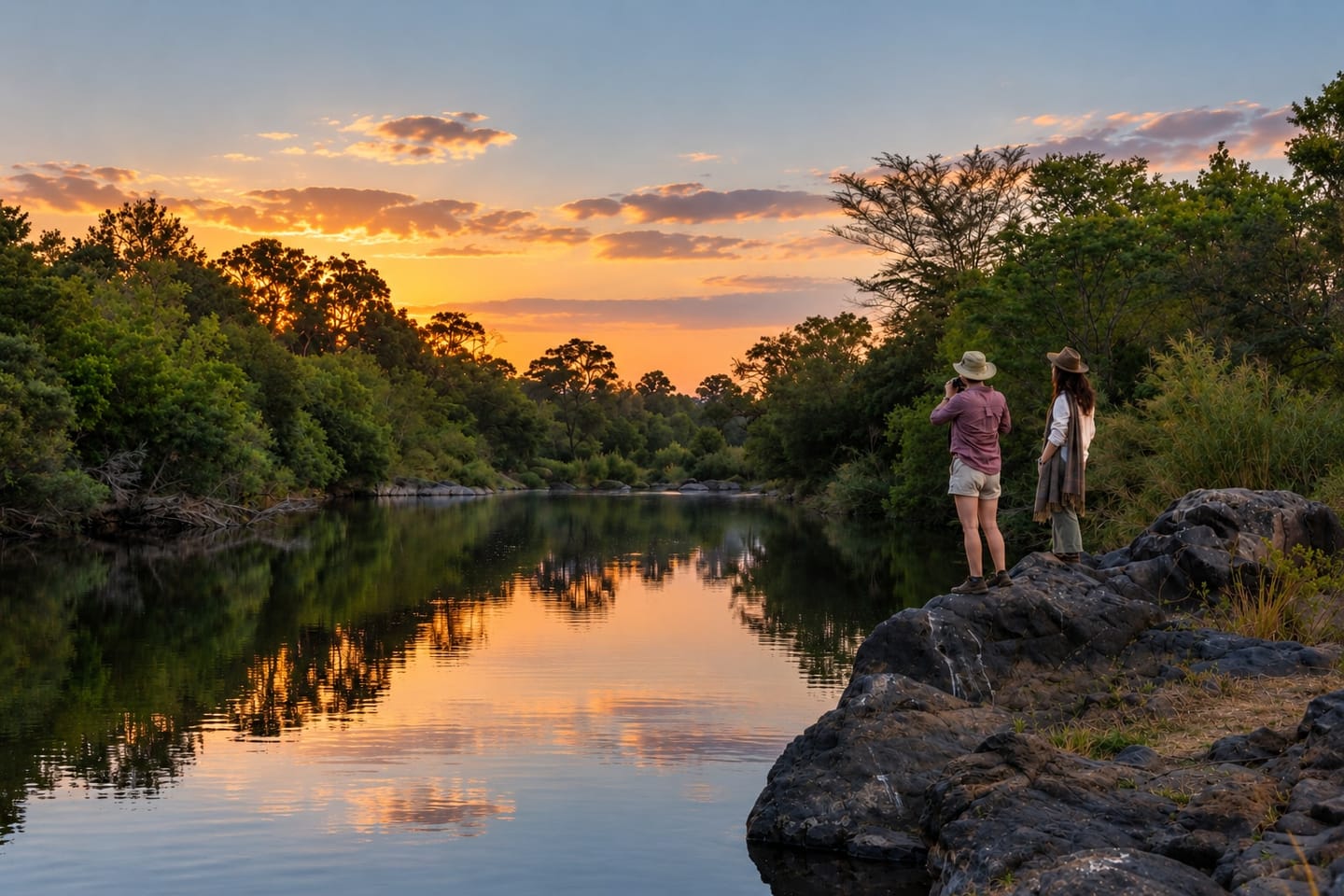

In September 2019, Audra and I were back in Hoedspruit looking at land. We had seen working lodges and empty plots and were getting tired when someone mentioned a property that didn't sound very promising. It was so overgrown we could barely find the gate. We spent about 45 minutes pushing a 4x4 along what may or may not have been a road. Then we came out into a clearing beside the remains of an old camp, with the Blyde River in front of us. That was the moment Oase began.
Today about 1.2 kilometres of that river runs along our reserve. It's the same river that cut the Blyde River Canyon up on the escarpment, and down here in the Lowveld it shapes a lot of what a stay at Oase can look like. It also does a quieter job: the lodge's drinking water is pumped from the Blyde by solar power and filtered several times, including with UV light, before it reaches the suites.
What the river frontage is like
Along the banks is riverine forest. The trees are bigger, the shade is deeper and on a hot Lowveld afternoon the air is noticeably cooler. Step back from the water and the reserve changes into woodland and then scrubland, which gives our 530 hectares more variety than the size suggests.
The sounds change too. Out in the open bush you listen for alarm calls and something moving through dry grass. By the river it's running water and birdsong, and long stretches when nothing much seems to happen. That's usually when you start noticing the small things.

Mornings by the water
On days when you're not heading into Kruger, breakfast can be set up beside the river. Coffee, fresh fruit and something cooked, while the bush wakes up around you. You might hear vervet monkeys in the trees or catch a kingfisher working the water. Compare that with a Kruger day, when we leave around 5am and eat breakfast in the park. Both are good. They're just very different starts.

Birding along the Blyde
Rivers bring in birds you won't find out on the open bush. These are some that birders come looking for along this stretch of the Blyde:
- giant and half-collared kingfishers
- African fish eagle
- trumpeter hornbill
- the shy African finfoot
- for the very patient, Pel's fishing owl
None of them turns up on cue, and we won't pretend otherwise. You don't need to be a serious birder to enjoy a morning here, either. Our guides are happy to slow right down, point things out and explain what you're hearing. Early morning is usually the best time.

Fishing the Blyde
Some guests come specifically to fish. Others try it for the first time because the river is there and the afternoon is free. Either way, it's one of the most relaxed things you can do here: find a spot on the bank, take your time and let the river set the pace.

If fishing matters to you, mention it when you plan your stay. Tell us how much you've done before and ask about equipment, and we'll talk you through what's practical for your dates.
Walking the riverine forest
Oase is not a Big Five reserve. Elephant, rhino and buffalo don't live here, which is a big part of why guided walks suit the reserve so well. With a guide you can leave the vehicle behind and explore the forest along the river on foot. You learn to read tracks in the sandy patches and notice the small details a vehicle tends to drive straight past.

Afternoons and evenings
Afternoons by the river are usually slow. A private picnic in the shade, a long lunch beside the water, a book, or a few hours doing nothing much at all. Some evenings, dinner is set up by the river too. As the light goes, a drink overlooking the water is one of the simplest pleasures we can offer, and a sunset drive on the reserve is there for anyone who wants one.

Between the Kruger days
We run full-day Kruger drives every second day, out around 5am and back around 3pm, with breakfast and lunch as picnics in the park. That's where the wider safari happens, and you choose which drives to join. The river is a big part of what fills the days in between, so they're not just a wait for the next drive. One day you might be in the park until mid-afternoon. The next you might start with birding, fish after lunch and finish with drinks by the water.
Couples tend to enjoy the quiet and the space. In families and multi-generational groups, the river gives people something to do apart for a few hours, from the keen anglers to those who just want shade and a long lunch. If you're travelling with young children, tell us when you plan and we'll suggest riverside spots and times that suit them.
Planning your time by the river
Through the Experience Designer you can tell us how much river time you'd like. That might be a quiet morning or two, a proper fishing afternoon or a picnic for a special occasion. Or you can leave it to our Guest Experience Team to fit it around the weather and the rest of your stay. You can see more of our meal settings on the Dining page.


